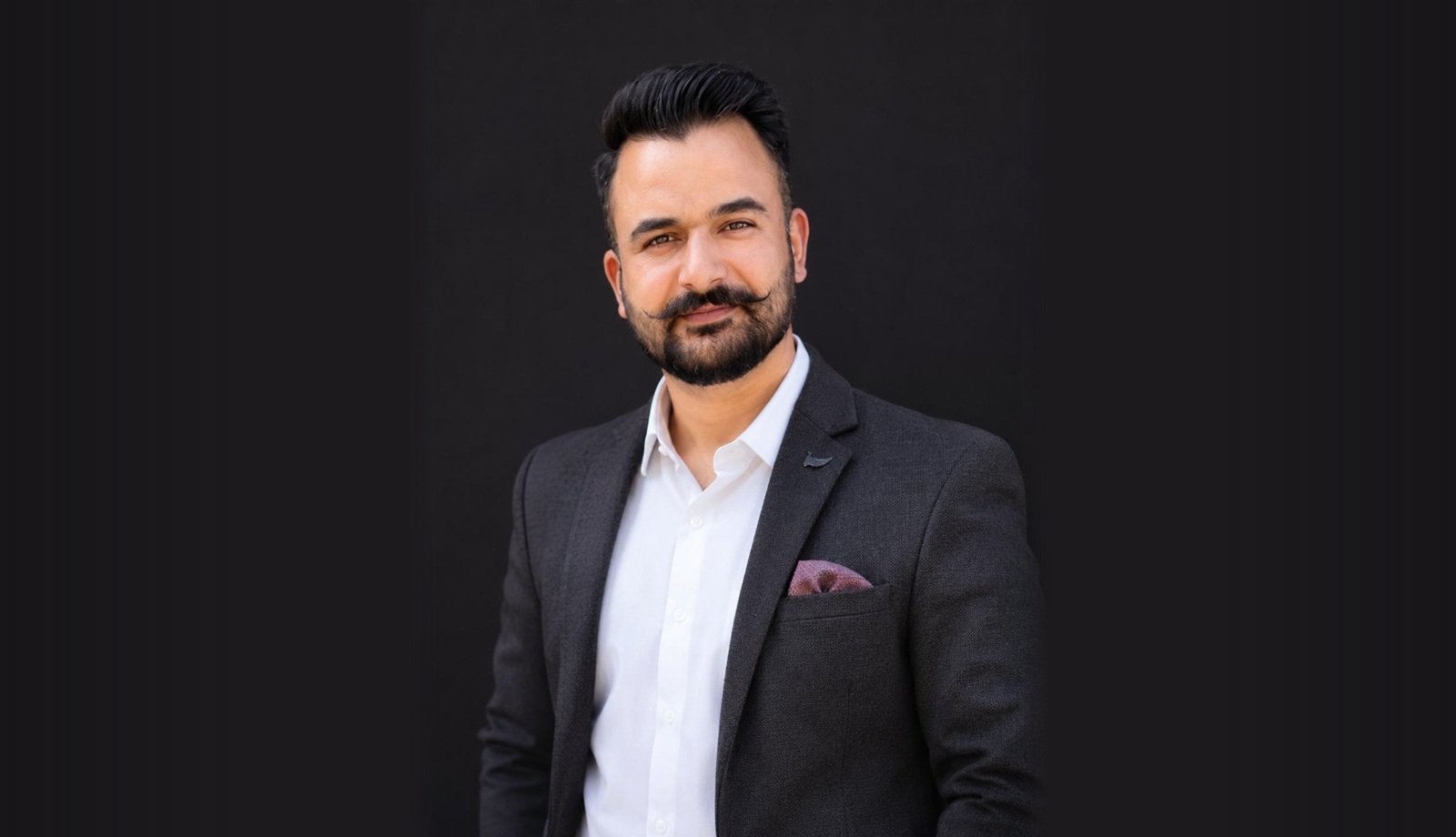
SRINAGAR / NEW DELHI — Long before the morning traffic stirs along the roads of the Kashmir Valley and long before the first wooden shikaras push out across the mirror-still surface of Dal Lake, Asif Jamil is already awake. His day begins around 5:00 AM. In the quiet hours before his work laptop opens and his household comes alive, there is a strict, self-imposed rhythm: early-morning preparation, physical training at the gym, and focused planning for the mountain routes and visual stories he wants to pursue next.
Only after putting in that early physical and creative work does he step into the demands of his daytime life—logging into his remote role as a technology professional, spending unhurried time with his wife Monaza and their two children, Wamik and Masheel, and editing short-form dispatches from the road.
To look at Asif Jamil solely through the lens of his outdoor visuals—cycling up lonely mountain switchbacks, steering a four-wheel-drive vehicle across rugged borderland tracks, carving down winter slopes on a snowboard, or lifting off into thermal currents under a paraglider—is to see only the finished frame. Behind those frames lies a far more relatable and compelling human story: that of an engineering graduate who tested himself in India’s largest metropolitan job markets, returned home to Kashmir, and is now methodically preparing himself—physically, professionally, and mentally—to build a life dedicated to exploration and storytelling.
Within approximately one year, Jamil hopes to transition away from his regular corporate job to dedicate himself more seriously to travel blogging, adventure, filmmaking, and documenting the lesser-seen corners of Kashmir. It is an ambitious timeline, carried not with reckless impulse, but with the measured discipline of a family man who understands exactly what is at stake.
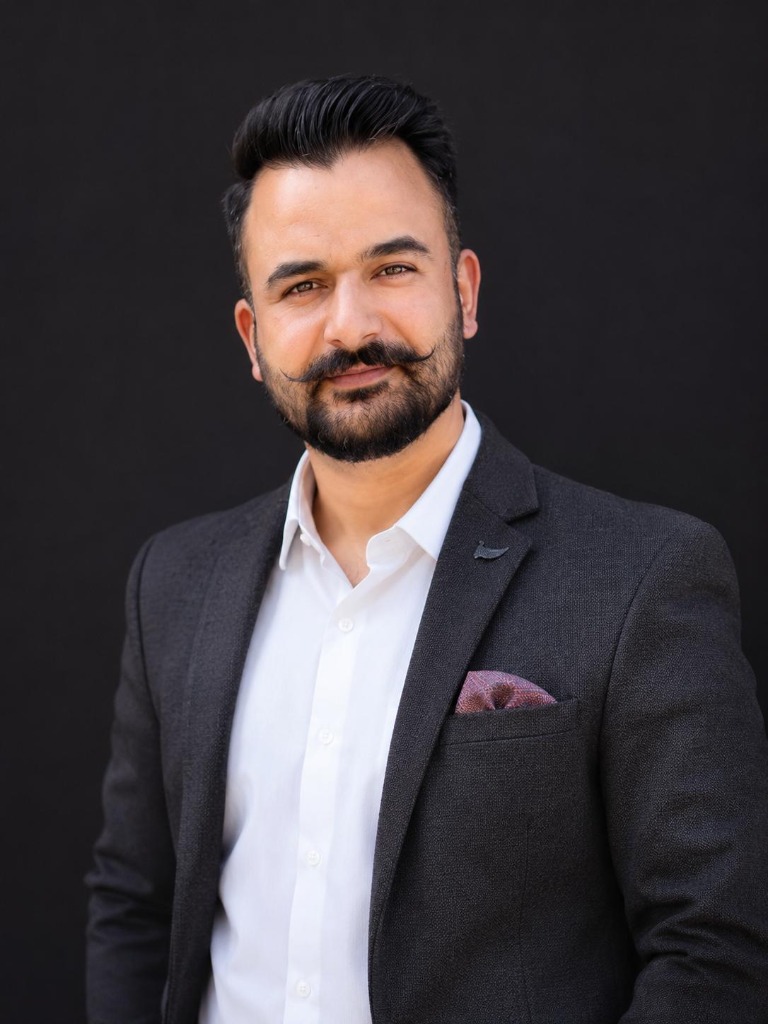
From Engineering Classrooms to Delhi, Mumbai, and Back to the Valley
Like many driven young professionals from Jammu & Kashmir, Jamil’s early trajectory followed the structured blueprint of a technical education. He studied engineering, developing the systems-oriented mindset that still anchors his career in technology today.
Upon completing his degree, his professional journey took him out of the Valley to Delhi. Yet corporate life in the national capital left him with the persistent sense that his professional routine was only using a fraction of who he was. Searching for stronger career opportunities and a wider horizon, he eventually moved to Mumbai, stepping into the relentless commercial pace of India’s financial capital.
Those years across Delhi and Mumbai gave him professional seasoning, independence, and perspective. Sometimes, it takes leaving home for the crowded skylines of India’s megacities to recognise the irreplaceable pull of the mountains you grew up with.
Today, Jamil is back home in Kashmir, working remotely. By conventional benchmarks, it is an enviable balance: a steady technology career paired with the comfort of home. Yet for Jamil, returning to the Valley reawakened a larger purpose. Working from home placed him back at the threshold of Kashmir’s trails, rivers, winter slopes, and frontier roads—and convinced him that a routine desk job is not where he wants his story to end.
The Emotional Centre: Why “Heaven on Earth” Deserves More Than a Postcard
When most aspiring digital creators speak about leaving a stable career for travel blogging and filmmaking, the conversation quickly turns to numbers: subscriber milestones, viral algorithms, or the desire to become a recognised social media celebrity.
When asked about his own ambitions, Jamil’s answer pointed somewhere far deeper.
His goal is not simply to become famous. His driving ambition is to represent Kashmir through his videos in a way that genuinely does justice to its natural beauty, cultural warmth, untamed landscapes, and adventure possibilities. For generations, Kashmir has been celebrated around the world as Heaven on Earth. Yet Jamil believes that the true character of the Valley cannot be captured through conventional tourist reels that recycle the same handful of viewpoints.
“My dream is not simply to become the biggest star. My dream is to represent Kashmir in a way that truly does justice to its beauty. People call Kashmir Heaven on Earth, and I want my videos to show why it deserves that name.”
That conviction shapes every journey he undertakes and shares on @beingasifjameel. Rather than treating the landscape as a quick selfie backdrop, he wants his camera work to invite viewers into a Kashmir that must be ridden, trekked, driven, and experienced firsthand.
Kashmir Beyond the Postcard: Five Disciplines, Five Ways of Seeing
Kashmir has never needed much introduction. Dal Lake, snow-covered peaks, Pahalgam’s meadows, Sonamarg’s glaciers, and Gulmarg’s slopes have made the Valley one of India’s most recognisable travel destinations. But as Jamil wrote in his foundational essay, “Kashmir Beyond the Postcard,” there is another Kashmir that begins where the sightseeing route ends.
He has experienced that side of the Valley through five distinct adventure disciplines—while preparing himself for future milestones such as skydiving:
1. Cycling Mountain Gradients
On two wheels, a cyclist discovers quiet mountain roads, orchards, and rural villages that never feature on a conventional tourist itinerary.
2. Overland Off-Roading
Navigating rugged terrain toward Keran, Tangdhar, and lesser-explored stretches of Bandipora and Baramulla where the road itself becomes the adventure.
3. High-Altitude Trekking
Once motorable roads end entirely, trekking opens access to forest trails, alpine meadows, and mountain ridges unreachable by car.
4. Winter Snowboarding & Aerial Paragliding
A snowboarder experiences winter dynamically rather than from a crowded viewpoint, while under a paraglider, an entire valley takes on a completely new form from the sky.
Some of his most memorable journeys have been off-road expeditions toward frontier sectors such as Keran and Tangdhar, alongside remote stretches of Bandipora and Baramulla. On those routes, he notes, “the destination is often only half the story. The road itself becomes the adventure.”
What still surprises him most is how unfamiliar off-roading seems to many people locally. Whenever a vehicle leaves the conventional tarmac and heads deliberately toward difficult terrain, residents and passers-by often stop and watch with unmistakable curiosity. To Jamil, that roadside curiosity points to a much larger, untapped opportunity for the region.
The Scale of Tourism—and the Missing Piece of Confidence
There is nothing wrong with Kashmir’s established destinations; Gulmarg, Pahalgam, Sonamarg, and Srinagar are popular for good reason. The challenge, Jamil argues, is ensuring that multi-crore tourism footfall is not concentrated around the exact same set of experiences.
For adventure tourism to absorb and disperse even a fraction of that footfall, promotion alone is not enough. The missing piece, Jamil emphasises, is confidence.
Travellers need clear route and activity information, trained operators, reliable equipment, and recognised safety benchmarks. The policy foundation is already in place: the Ministry of Tourism, Government of India, has formulated standardised Adventure Safety Guidelines and called for strict adherence to safety regulations and licensing norms. Kashmir can build directly on this framework with stronger local operators and accessible visitor information.
When travellers venture beyond the traditional circuit, the economic benefits reach far beyond mainstream hotel corridors—supporting local guides, certified instructors, transporters, family-run homestays, and small businesses in lesser-known districts. Yet Jamil insists that growth must remain responsible: remote landscapes require strict protection from waste, reckless driving, and uncontrolled tourism.
The Family Behind the Dreams: Monaza, Wamik, Masheel, and the Pillars of Home
Behind every early-morning workout and every journey into the mountains is a family story defined by warmth, resilience, and shared belief.
Asif is married to Monaza, and together they are raising two children: their son, Wamik, and their daughter, Masheel. For a husband and father, the ambition to step away from a regular job within a year is not a solitary daydream—it is a commitment that demands daily discipline. Waking up at 5:00 AM to train at the gym, staying physically and mentally conditioned for demanding outdoor pursuits, fulfilling his corporate responsibilities, and still carving out dedicated family time is how Jamil honours his responsibilities at home while building toward his future.
His understanding of family responsibility was also shaped by personal loss. Asif lost his father—a bereavement that quietly deepened his resolve and his appreciation for the people who stand beside him.
Through every chapter of his journey, his grandfather, grandmother, mother, and sisters have been vital sources of encouragement and strength. His grandparents—and particularly his grandfather—have served as an enduring pillar in his life, offering the steady foundation that allows him to look toward the mountains with confidence.
The India Daily Rise Editorial Q&A with Asif Jamil
Part I: Exploring Kashmir Beyond the Postcard
Question 01 // Beyond the CircuitWhat makes you explore Kashmir beyond its famous tourist destinations like Dal Lake, Gulmarg, and Pahalgam?
Asif Jamil: There is nothing wrong with Kashmir’s established destinations—Gulmarg, Pahalgam, Sonamarg, and Srinagar are popular for good reason. But visitors are often introduced to Kashmir through a limited set of destinations. For me, another Kashmir begins when the sightseeing route ends. Moving beyond the postcard turns a conventional holiday into something far more immersive.
Question 02 // Five DisciplinesHow do cycling, off-roading, trekking, snowboarding, and paragliding change the way you experience the Valley?
Asif Jamil: Each discipline reveals a different dimension of the landscape. A cyclist can discover mountain roads and villages that never feature on a conventional itinerary. A trekker can experience landscapes unreachable by car. A snowboarder experiences winter differently from someone visiting a snowy viewpoint. And from a paraglider’s perspective, an entire valley takes on a completely different form.
Question 03 // Frontier RoadsWhat has been your most memorable takeaway from exploring places such as Keran, Tangdhar, Bandipora, and Baramulla?
Asif Jamil: Some of my most memorable journeys have been off-road toward places such as Keran and Tangdhar and lesser-explored areas of Bandipora and Baramulla. On those routes, you realise that the destination is often only half the story—the road itself becomes the adventure. What surprises me most is how unfamiliar off-roading still seems to many people here. When a vehicle leaves the conventional road and heads toward difficult terrain, people often stop and watch with curiosity. That curiosity points to a much larger opportunity.
Question 04 // Safety & ConfidenceWhy do you think adventure tourism in Kashmir has so much untapped potential, and what challenges must it overcome?
Asif Jamil: The scale of tourism makes the opportunity significant, with Jammu & Kashmir recording 2.36 crore visits in 2024 and 1.77 crore visits in 2025. The challenge is making sure tourism isn’t concentrated around the same experiences. However, promotion alone isn’t enough—the missing piece is confidence. Travellers need clear information, trained operators, reliable equipment, and recognised safety standards, building on the Ministry of Tourism’s standardised Adventure Safety Guidelines and licensing norms.
Question 05 // Community & EcologyHow can local communities benefit from responsible adventure tourism without harming fragile mountain ecosystems?
Asif Jamil: The opportunity extends far beyond mainstream tourism. Guides, instructors, transporters, homestays, and small businesses in lesser-known areas can all benefit when travellers venture beyond the traditional circuit. But growth must remain responsible—remote landscapes need protection from waste, reckless driving, and uncontrolled tourism.
Part II: The Person Behind the Story — Career, Family, Discipline & Ambition
Question 06 // Delhi, Mumbai & HomeYou studied engineering and worked in Delhi and Mumbai. What eventually made you realise that your true calling might be back in Kashmir?
Asif Jamil: Studying engineering and moving to Delhi for work was the natural first step after completing my education, and moving to Mumbai later opened up better career opportunities. Those cities teach you a great deal about professional pace, but I wasn’t entirely satisfied with my professional life away from home. Returning to Kashmir to work remotely brought me back to the mountains, trails, and roads I love—and made me realise that my true calling lies in exploring and documenting this landscape deeply.
Question 07 // The One-Year HorizonYou have a stable professional career and a family. What gives you the courage to consider leaving your job and pursuing adventure blogging full-time?
Asif Jamil: When you have a family, you don’t approach a decision like that impulsively—you build toward it with discipline and a clear timeline. Working remotely in Kashmir has allowed me to fulfil my professional duties while steadily developing my outdoor skills, filmmaking, and content creation. The courage comes from putting in the preparation every day and knowing that I am working toward a meaningful goal over the next year.
Question 08 // Representing “Heaven on Earth”You say Kashmir is Heaven on Earth. What do you think most content creators still fail to capture about it?
Asif Jamil: Conventional tourist content usually stops at the familiar postcard viewpoints. My dream is not simply to become the biggest star on social media; my dream is to represent Kashmir in a way that truly does justice to its beauty, culture, landscapes, and adventure opportunities. People call Kashmir Heaven on Earth, and I want my videos to show why it deserves that name by exploring its lesser-known places through honest, meaningful storytelling.
Question 09 // Family & FoundationHow important has your family been in supporting your ambitions, especially after the loss of your father?
Asif Jamil: Losing my father was a deeply significant part of my personal journey, and it makes you value family and responsibility even more deeply. My wife, Monaza, and our children, Wamik and Masheel, are at the centre of my life and give me the strength to keep striving. Alongside them, my grandfather, grandmother, mother, and sisters have been constant sources of encouragement. My grandparents—and especially my grandfather—have been a strong foundation in my life, and knowing my family believes in me means everything.
Question 10 // 5:00 AM DisciplineYou wake up early around 5 AM, maintain your fitness at the gym, work professionally, and create content. How do you manage your time, and what motivates you to keep going?
Asif Jamil: Adventure isn’t something you only dream about; it requires preparing yourself physically and mentally for the lifestyle you want to live. Waking up around 5:00 AM and committing to physical fitness at the gym sets the tone for the entire day. It gives me the structure to manage my professional job, spend meaningful time with Monaza, Wamik, and Masheel, and still dedicate focused time to travel blogging and planning upcoming adventures.
Question 11 // Looking One Year AheadImagine we meet again one year from today. What would you want to have achieved, and what would you want people to remember about your work?
Asif Jamil: One year from today, I hope to have moved much closer to dedicating myself full-time to travel blogging, adventure, filmmaking, and exploring Kashmir—including taking on new experiences such as skydiving. Above all, I want people to remember my work not for chasing fame, but for showing them a deeper, more authentic side of Kashmir that they had never seen before.
A Different Kind of Paradise: Kashmir’s Emerging Storyteller
Kashmir has spent decades being photographed as paradise. Perhaps its next chapter is about experiencing it differently—riding it, trekking it, driving it, flying over it, and exploring it with care and respect.
And perhaps the next name to watch from Kashmir will not be someone chasing fame, but someone chasing the mountains, valleys, forgotten roads, and stories that deserve to be seen.
Asif Jamil has given himself an ambitious timeline. Within the next year or two, he hopes to move closer to a life dedicated to exploration and visual storytelling. Whether that dream unfolds exactly as planned remains to be seen. But one thing is clear: he wants the world to experience Kashmir through far more than postcards.
Remember the name — Asif Jamil. Over the next one to two years, he could emerge as one of Kashmir’s most interesting new personalities to watch, and his most important journey may still be ahead of him.