NEW DELHI — As the Joint Parliamentary Committee (JPC) advances its clause-by-clause scrutiny of the constitutional amendment bills enabling simultaneous elections, the Election Commission of India (ECI) has submitted a detailed operational and industrial readiness assessment covering Electronic Voting Machine (EVM) manufacturing, central paramilitary deployment, and polling booth expansion.
Transitioning India’s staggered electoral calendar into a synchronized national polling cycle represents the largest democratic logistics exercise in modern history, requiring every polling station to operate dual M3-generation voting compartments simultaneously.
BEL and ECIL Manufacturing Pipeline for M3 EVMs
Because each elector in a simultaneous poll casts two distinct ballots—one for their Parliamentary constituency and another for their State Assembly constituency—equipment requirements nearly double compared to a standalone general election. Public sector defence and electronics manufacturers Bharat Electronics Limited (BEL) and Electronics Corporation of India Limited (ECIL) have mapped out production lines capable of delivering over 41 lakh Voter Verifiable Paper Audit Trail (VVPAT) units and 53 lakh Ballot Units within a 30-month lead window.
Read more parliamentary and constitutional coverage in our Politics & Governance Desk.
Common Electoral Roll and Article 325 Synchronization
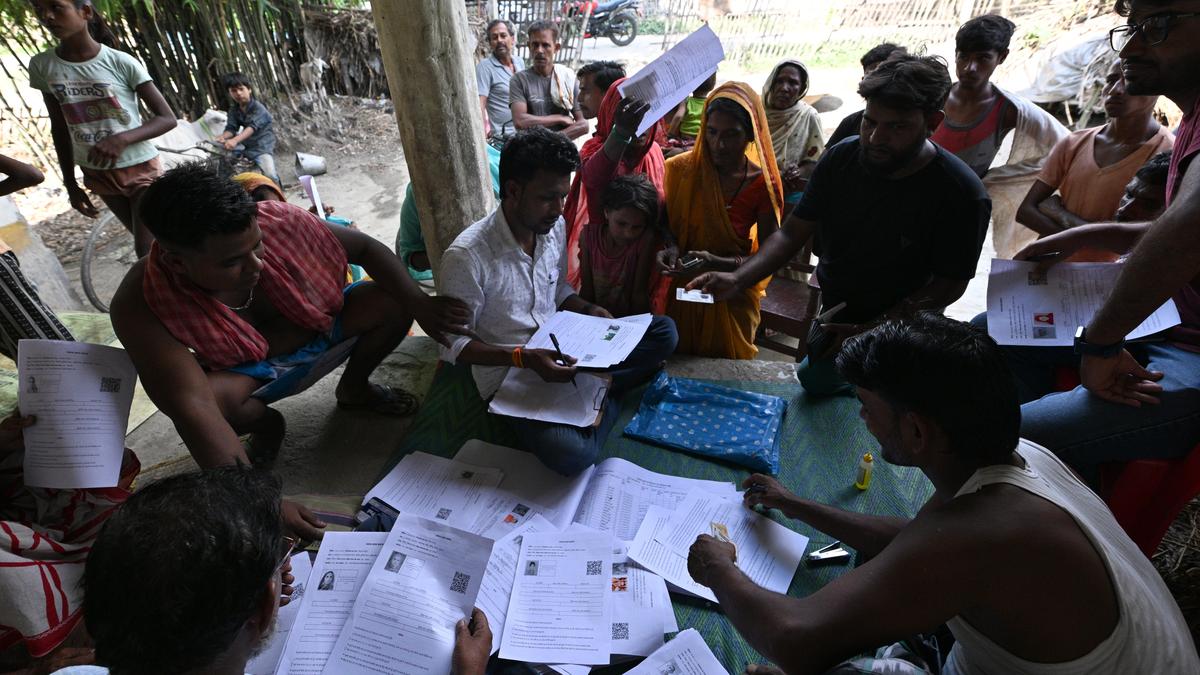
Alongside hardware procurement, the ECI is upgrading its digital backbone to unify electoral rolls currently maintained separately by the Election Commission of India and various State Election Commissions (SECs). By standardising voter registration databases under a single cryptographic architecture, election authorities aim to eliminate duplicate registrations while streamlining postal and migrant voting protocols.