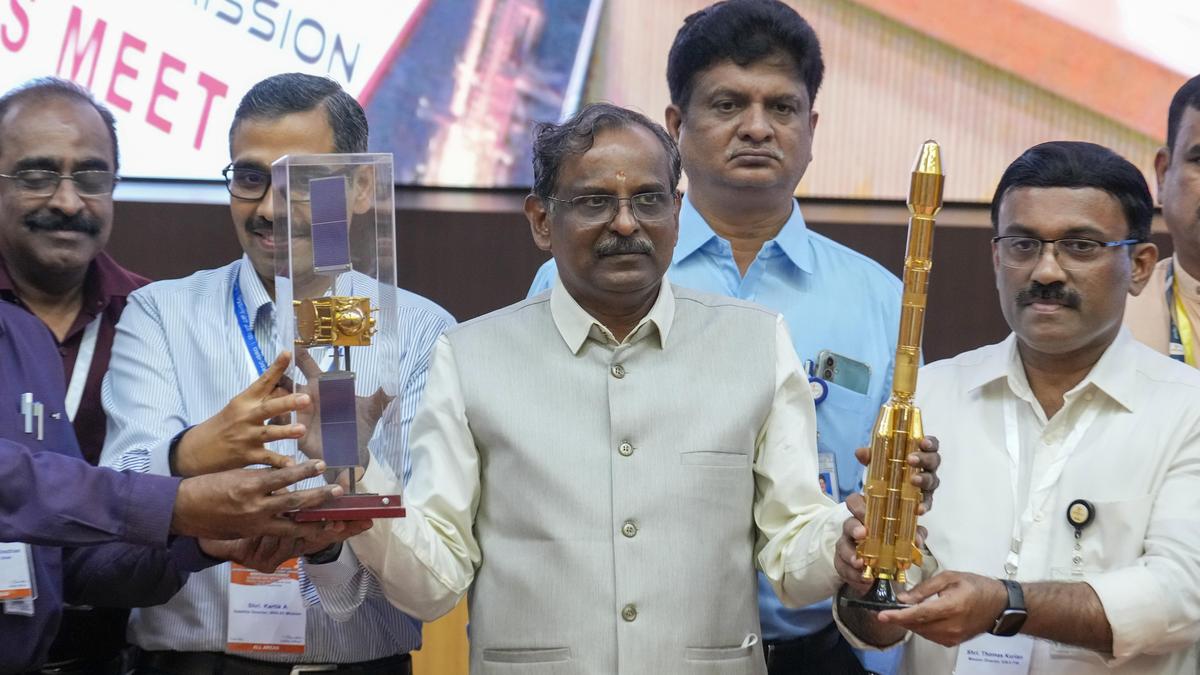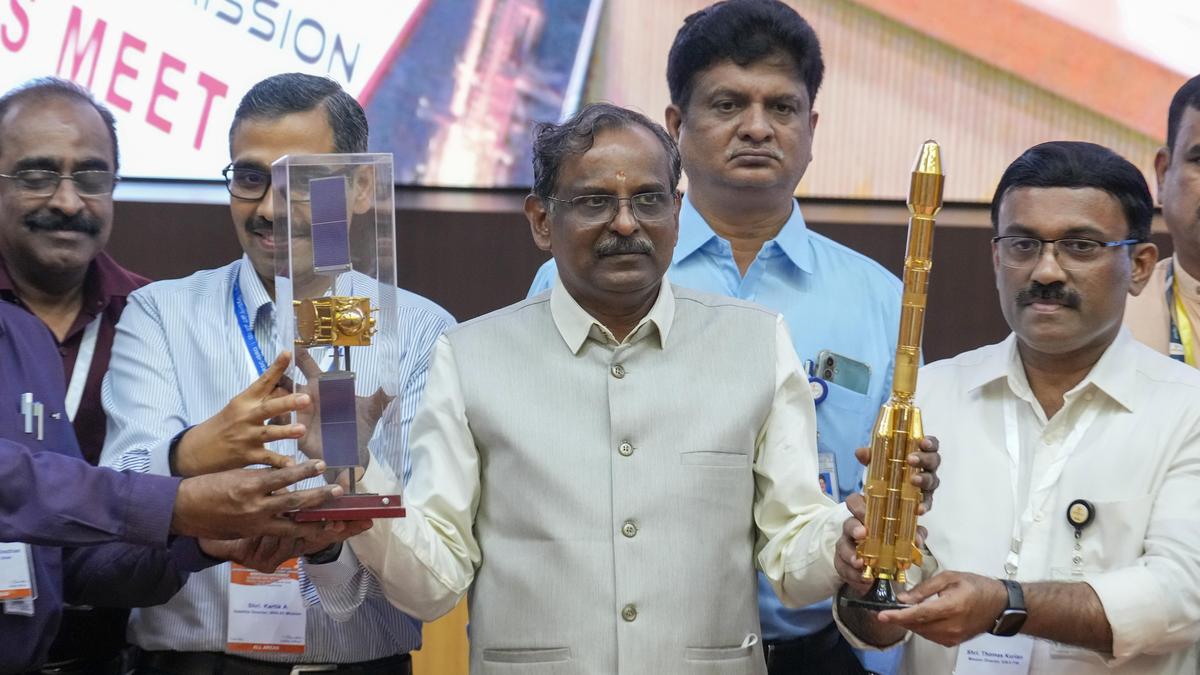
BENGALURU / HASSAN — Scientists and mission directors at the Indian Space Research Organisation (ISRO) achieved a decisive engineering milestone on Saturday as the Master Control Facility (MCF) at Hassan in Karnataka successfully completed the primary orbital circularisation firing for the NVS-03 satellite, placing the 2,232-kilogram navigational spacecraft into its designated orbital slot.
Launched late Friday night aboard the three-stage Geosynchronous Satellite Launch Vehicle (GSLV-F18) from the Satish Dhawan Space Centre in Sriharikota, NVS-03 serves as the second spacecraft in India’s second-generation Navigation with Indian Constellation (NavIC) series. Telemetry data confirmed that both solar array wings deployed as programmed, generating 2.4 kilowatts of electrical power to charge on-board lithium-ion storage cells and activate payload transponders.
A crucial technological breakthrough of the mission is the flawless in-orbit validation of the indigenously developed space-grade Rubidium Atomic Frequency Standard (RAFS), engineered by the Space Applications Centre (SAC) in Ahmedabad. Earlier first-generation IRNSS spacecraft had relied on imported timing modules, which suffered isolated telemetry anomalies; the new indigenous clock provides nanosecond-precision synchronisation, ensuring sub-metre positioning accuracy for both sovereign defence encrypted channels and commercial civilian applications.
Crucially for the consumer technology sector, NVS-03 carries the civilian L1 navigation frequency band (1575.42 MHz), ensuring backward and direct compatibility with global satellite navigation standards such as GPS and Galileo. The Department of Telecommunications (DoT) and Ministry of Electronics and Information Technology (MeitY) have previously issued operational roadmaps requiring 5G mobile handsets and commercial fleet telemetry units to incorporate NavIC support by 2026, a target that Saturday’s orbital success brings firmly into operational reality.