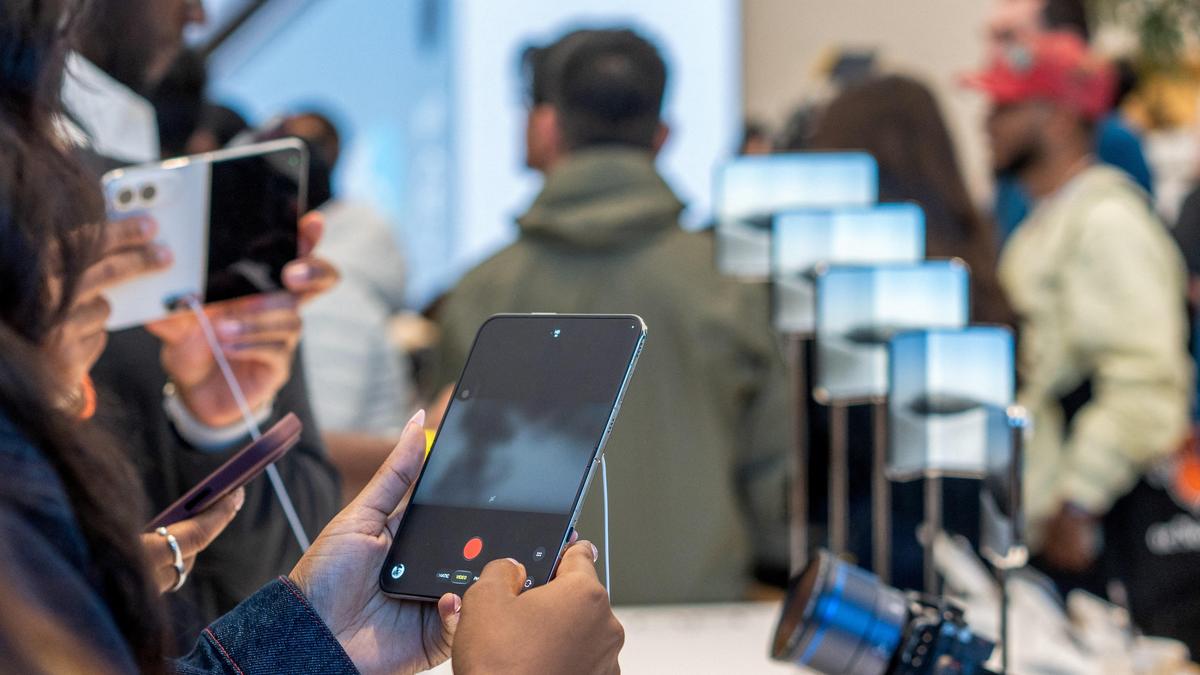
India 6G Vision and Terahertz Spectrum Allocation: DoT Testbeds, Bharat 6G Alliance Standards, and Satellite Direct-to-Device (D2D)

Department of Telecommunications releases experimental spectrum in the sub-terahertz bands between 100 GHz and 300 GHz, empowering the Bharat 6G Alliance to pioneer global patents in satellite-terrestrial convergence...

AI Voice Narration ~2 min audio
India 6G Vision and Terahertz Spectrum Allocation: DoT Testbeds, Bharat 6G Alliance Standards, and Satellite Direct-to-Device (D2D)
India 6G Vision and Terahertz Spectrum Allocation: DoT Testbeds, Bharat 6G Alliance Standards, and Satellite Direct-to-Device (D2D) | Desk: Technology | India Daily Rise
In Brief: Key Verified Takeaways
  • Sub-Terahertz Spectrum Bands Opened: Experimental licensing initiated for frequency bands between 95 GHz and 3 THz to support multi-gigabit wireless backhaul.
  • Direct-to-Device (D2D) Satellite Standards: Native integration protocols developed enabling standard commercial 5G/6G smartphones to connect directly to LEO satellite constellations.
  • IIT Madras 6G Testbed Milestone: Academic-industrial testbed successfully demonstrates 100 Gbps wireless data transmission over a 1.2-kilometer terrestrial link.
  • Global Patent Leadership: Indian telecommunications researchers file over 380 Standard Essential Patents (SEPs) with the International Telecommunication Union (ITU).
  • Zero-Latency Industrial Automation: Enables microsecond wireless feedback loops for robotic surgery, intelligent traffic grids, and automated factory robotics.

NEW DELHI & CHENNAI — In an aggressive bid to transition India from a consumer of telecom technologies to a primary creator of global telecommunications intellectual property, the Department of Telecommunications (DoT) has authorized experimental spectrum allocations across the sub-terahertz range (95 GHz to 300 GHz). Coordinated by the Bharat 6G Alliance, the regulatory directive paves the way for commercial hardware prototyping in ultra-dense wireless communications, holographic telepresence, and ubiquitous satellite-terrestrial convergence.

While India’s 5G rollout achieved the fastest geographical deployment recorded globally, policymakers and engineering consortiums are executing a multi-year blueprint to ensure Indian patents form the foundational core of the International Telecommunication Union’s (ITU) 6G standardizations.

Terahertz Spectrum and 100 Gbps Wireless Throughput

At the national 6G testbed established across IIT Madras, IIT Delhi, and the Society for Applied Microwave Electronics Engineering & Research (SAMEER), research teams demonstrated a sustained wireless transmission speed of 100 Gigabits per second across a 1.2-kilometer terrestrial path using 140 GHz radio frequencies.

The transition to terahertz bands unlocks unprecedented bandwidth density, enabling instantaneous data transfers required by autonomous vehicular networks, interactive artificial intelligence models, and industrial digital twins that cannot tolerate microsecond latency spikes.

Explore full deep-dives into Indian technological innovation in our Technology Section.

Satellite Direct-to-Device (D2D) Integration

A transformative architectural shift in the Bharat 6G standard is native non-terrestrial network (NTN) integration. Unlike traditional mobile networks that depend entirely on ground-based cellular towers, 6G incorporates satellite Direct-to-Device (D2D) capabilities directly into commercial chipsets.

Standard smartphones will seamlessly switch between terrestrial 6G micro-cells in urban corridors and low-Earth orbit (LEO) satellite constellations over rural hinterlands, maritime economic zones, and Himalayan borders, permanently eradicating mobile coverage blackouts across the subcontinent.

Indigenous Patent Monetization and Manufacturing

India’s telecommunications R&D expenditure has begun yielding measurable strategic returns. Indian researchers and private hardware firms have registered over 380 Standard Essential Patents (SEPs) with international bodies. This domestic patent portfolio ensures that as global carriers deploy 6G infrastructure toward the turn of the decade, Indian technology firms will collect cross-licensing royalties rather than paying external licensing fees.

Direct Newsroom Dispatch

The India Daily Rise Morning Briefing

Receive verified national and geopolitical reporting, policy breakdowns, and the daily market wrap directly in your inbox every morning at 7:00 AM IST. Zero clutter. Free forever.

Verified Institutional Sources & Public Records

This dispatch has been independently verified against official government gazettes, statutory regulatory releases, institutional press briefings, and multi-agency news wires in accordance with the India Daily Rise Verification Protocol.

I

IDR Technology & Policy Desk

✓ Verified Desk

Special Correspondent & Policy Analyst covering Technology and national affairs for India Daily Rise. Committed to ethical, evidence-based reporting.

Standards: Code of Ethics 2026  •  Corrections: Editorial Ombudsman

Explained: Key Questions & Context

Q: What is the Bharat 6G Alliance and what are its objectives?

The Bharat 6G Alliance is a collaborative collaborative body uniting government, telecom operators, academic institutions, and manufacturing giants to lead global 6G intellectual property and hardware development.

Q: What speeds and latency are expected from 6G wireless technology?

6G networks aim to deliver peak data rates exceeding 100 Gbps (up to 1 Tbps in specialized environments) with sub-millisecond latencies under 0.1 milliseconds.

Q: How does satellite Direct-to-Device (D2D) technology work in 6G?

D2D protocols allow ordinary smartphones to send text, voice, and data directly to low-Earth orbit satellites without requiring bulky satellite terminals, eliminating cellular dead zones.

Live News Hubs: Today’s News • Latest News • India News Today • Breaking News • Current Affairs • Today’s Headlines